The terminal was already busy when a woman quietly walked through the main airport hall.
Passengers rushed toward their gates. Families stood in long security lines. Business travelers checked their phones while airport employees moved quickly from one area to another.
Among the crowd was a woman named Claire Morgan.
She looked completely ordinary.
She wore a simple dark blazer, comfortable pants, and carried a small handbag. There was nothing about her appearance that suggested she held an important position.
She had arrived at the airport without an entourage, without a security detail, and without anyone announcing her arrival.
That was intentional.
Claire continued walking until she reached a corridor near a restricted security area.
A uniformed airport officer noticed her.
He immediately stepped forward.
“Ma’am, you can’t go through this area.”
Claire stopped.
“I understand,” she said politely. “I need to speak with the security supervisor inside.”
The officer looked at her suspiciously.
“Do you have authorization?”
“Yes.”
“Can I see it?”
Claire reached into her handbag.
Before she could take out her phone, the officer interrupted.
“Actually, don’t worry about it. You can’t just walk into restricted areas.”
Claire remained calm.
“I’m not trying to walk in without authorization. I’m telling you that I have clearance.”
The officer crossed his arms.
“Ma’am, I’ve been working here long enough to know how this works.”
A few passengers nearby began watching the conversation.
Claire tried again.
“I understand your responsibility. But please allow me to contact the supervisor.”
The officer shook his head.
“You don’t need to tell me how to do my job.”
Claire looked at him for a moment.
Then she quietly said:
“I’m not telling you how to do your job. I’m asking you to verify my authorization.”
The officer became more impatient.
“You’re just a passenger. Please go back to the public area.”
The words caught the attention of several people standing nearby.
Claire didn’t react angrily.
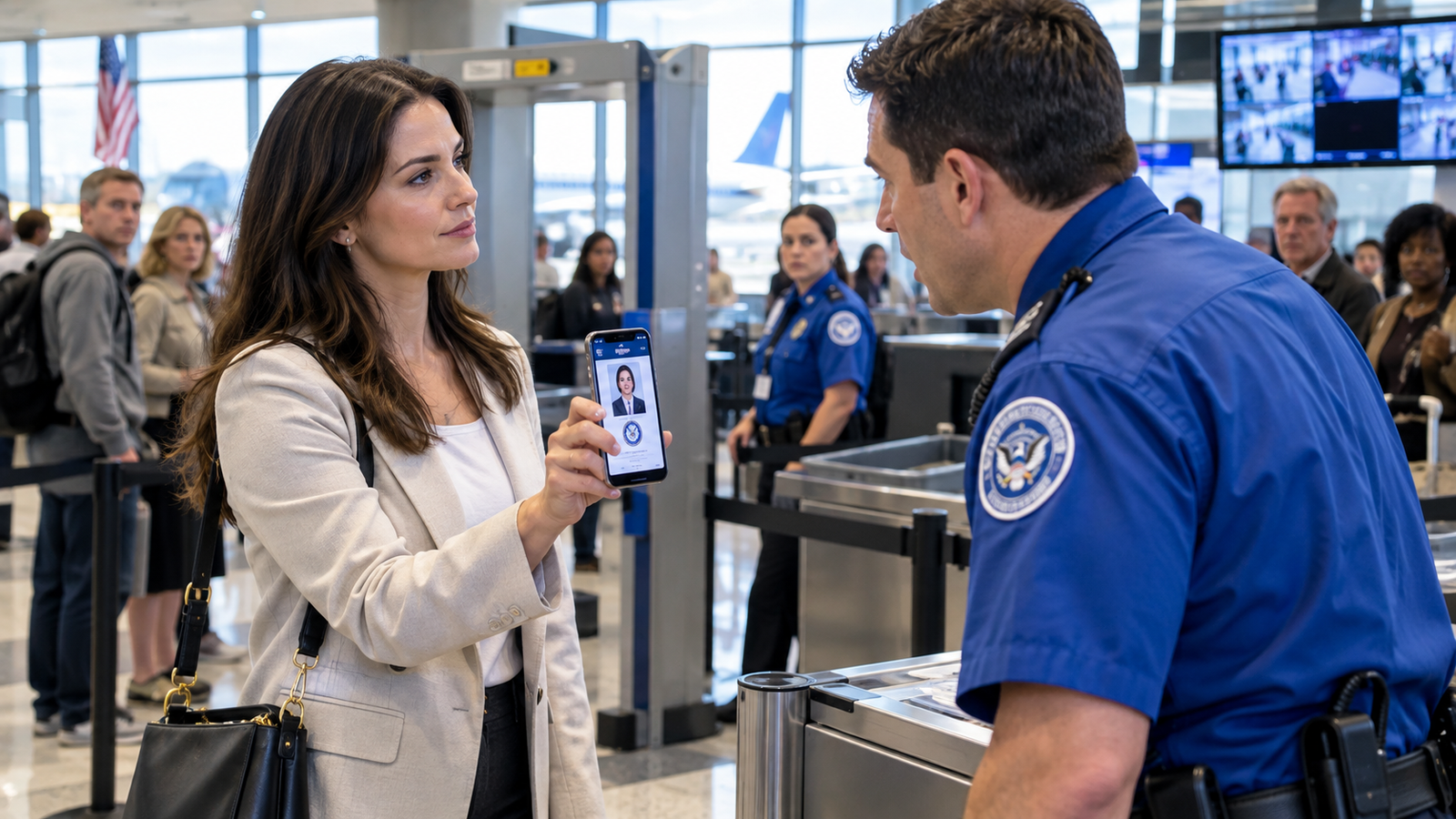
Instead, she took out her phone.
“Are you sure you don’t want to check first?”
The officer sighed.
“Ma’am, this is an airport, not a discussion. If you don’t have a reason to be here, you need to leave.”
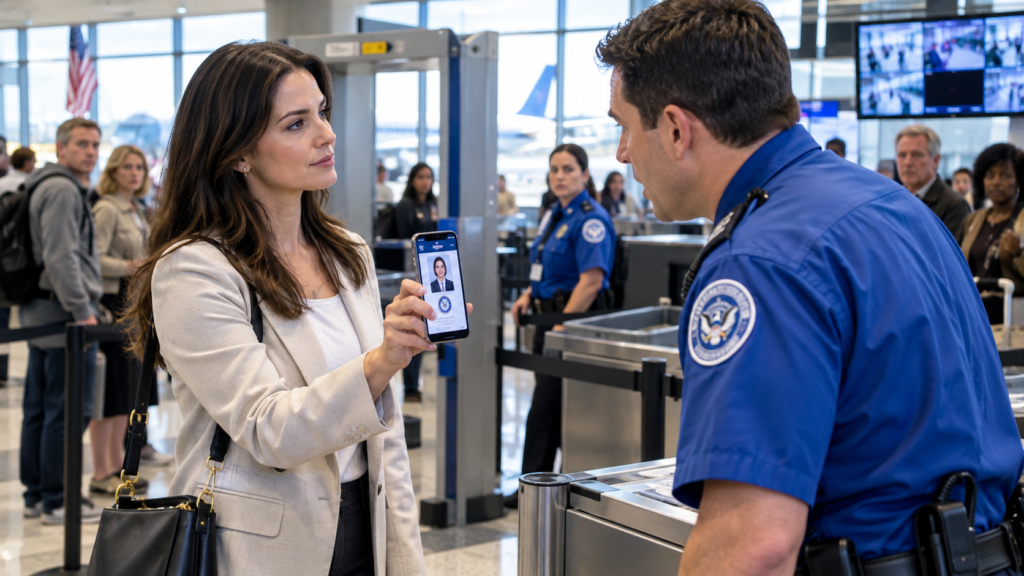
Claire unlocked her phone and opened a digital identification document.
She turned the screen toward him.
The officer looked at it.
His expression changed.
He read the information again.
Then he looked directly at Claire.
“Wait…”
Claire remained silent.
The officer looked at the identification one more time.
“You’re Claire Morgan?”
“Yes.”
His face suddenly became serious.
Claire Morgan wasn’t simply an airport passenger.
She was a senior federal aviation security official conducting an unannounced inspection of the airport’s security procedures.
The officer took a step back.
“I’m sorry. I didn’t recognize you.”
Claire put her phone away.
“You weren’t supposed to recognize me.”
The officer looked confused.
Claire continued.
“That was part of the inspection.”
The people nearby became even more interested.
The officer suddenly realized what had happened.
The official had deliberately arrived without a visible security team because she wanted to see how airport personnel treated ordinary travelers and how carefully they verified access.
She wasn’t offended because the officer had stopped her.
In fact, stopping her was exactly what he should have done.
The problem was how he had handled the situation.
Claire looked toward the restricted corridor.
“You were right to stop me,” she said.
The officer seemed surprised.
“I was?”
“Yes.”
She continued:
“Anyone approaching a restricted area should be questioned. You were doing your job.”
Then her expression became more serious.
“But telling someone they’re ‘just a passenger’ before checking their authorization is another matter.”
The officer lowered his eyes.
Claire wasn’t interested in embarrassing him.
She wanted him to understand the difference.
“Security isn’t about knowing who someone is,” she said. “It’s about following the correct procedure with everyone.”
The officer nodded.
“I understand.”
Claire then contacted the security supervisor.
Within minutes, several senior airport employees arrived.
The officer explained what had happened.
Claire didn’t demand that he be punished.
Instead, she asked the supervisor to review the entire incident.
She wanted to know whether the officer’s training emphasized verification procedures, respectful communication, and equal treatment of passengers.
The supervisor assured her that the matter would be reviewed.
Before leaving, Claire turned toward the officer.
“You made one important mistake today.”
The officer looked nervous.
“What was it?”
“You assumed that because I looked like an ordinary passenger, I couldn’t possibly have an important reason to be here.”
The officer nodded slowly.
Claire smiled slightly.
“And that’s exactly why inspections like this are necessary.”
The confrontation ended without shouting, threats, or humiliation.
But the lesson stayed with everyone who had witnessed it.
Claire could have immediately revealed her identity.
She could have demanded access.
She could have reminded the officer of her position.
Instead, she allowed the situation to continue long enough to see how the airport’s procedures actually worked.
And what she discovered was more valuable than simply getting through the checkpoint.
The incident became an internal training example.
Airport management used it to remind employees that professionalism doesn’t mean treating important people differently.
It means treating everyone according to the same rules.
The officer who had called Claire “just a passenger” eventually apologized again.
This time, Claire accepted.
“I don’t need you to remember my name,” she told him.
“I need you to remember the lesson.”
He nodded.
From that day forward, he became known among his colleagues as one of the most careful officers at the checkpoint.
He never again judged a passenger by their clothing, appearance, age, or perceived social status.
Because he had learned something that many people discover only after making a serious mistake:
You never truly know who is standing in front of you.
Sometimes the person you ignore is the person evaluating you.
Sometimes the quietest person in the room has the most authority.
And sometimes the biggest lesson begins with someone simply being told:
“You’re just a passenger.”
Claire’s story became a reminder that respect should not be reserved for people who appear powerful.
Respect should be the standard for everyone.
Because when you treat people well only after discovering their status, you aren’t really showing respect.
You’re showing recognition.
And there is a big difference between the two.