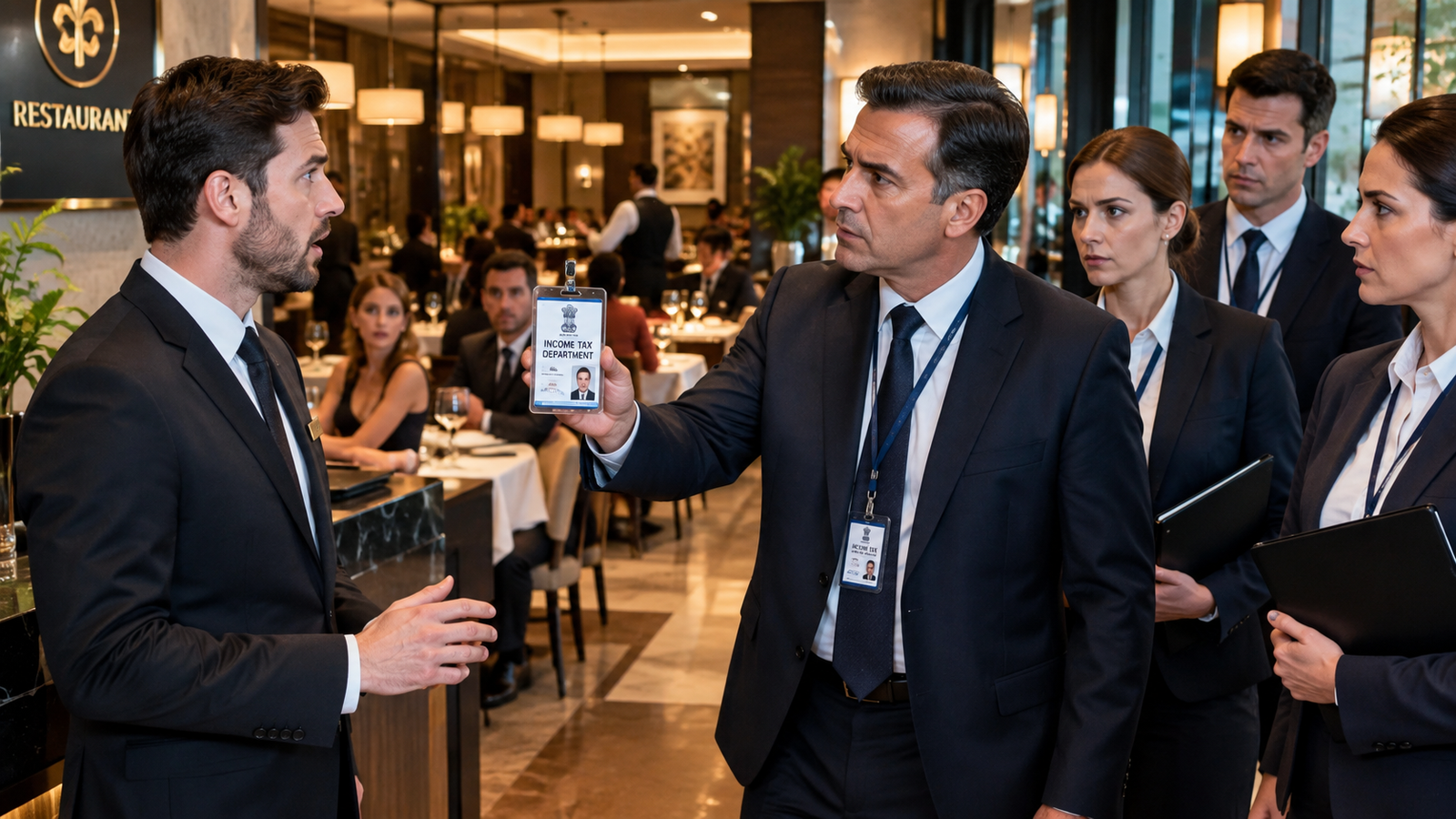
The restaurant was at its busiest around eight o’clock that evening.
Every table was occupied. Families were enjoying dinner, couples were having conversations, and several business groups were sitting in separate corners discussing their work.
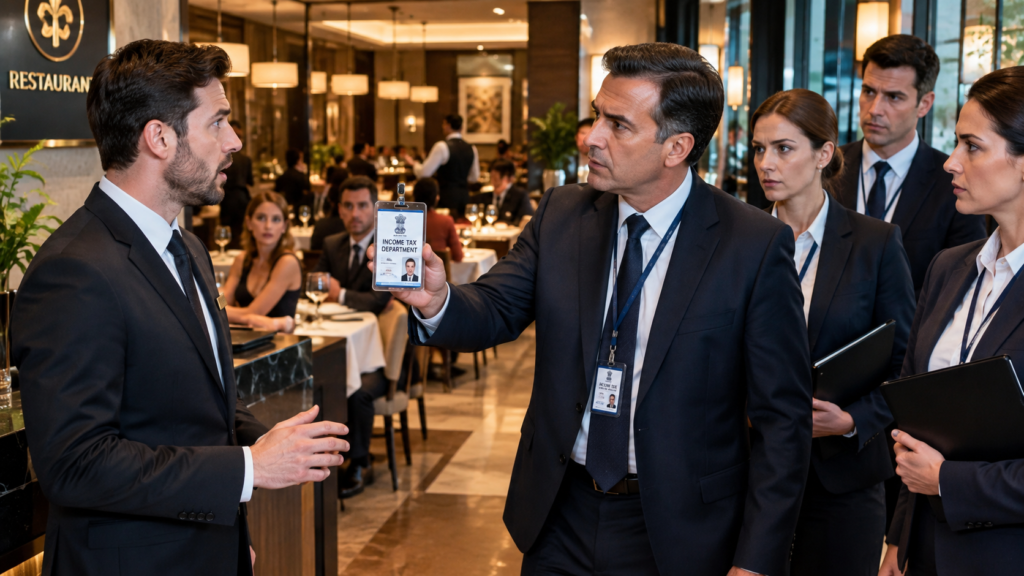
The atmosphere was warm and lively.
Daniel, the restaurant manager, stood behind the reception desk and watched his employees carefully.
He had been managing the restaurant for several years and knew exactly how important customer service was.
Whenever an important-looking guest entered the restaurant, Daniel made it a point to personally welcome them.
That evening, however, something unexpected was about to happen.
Four people entered through the main door.
They were formally dressed and carried themselves in a serious and professional manner.
They did not immediately look at the menu.
They did not ask about available tables.
Instead, they quietly looked around the restaurant.
Daniel noticed them from the reception area.
He immediately assumed they might be business executives or special guests.
Perhaps they had been referred by one of the restaurant’s regular customers.
Daniel quickly walked toward them.
“Good evening. Welcome to our restaurant,” he said politely.
One of the men looked at him.
“Are you the manager?”
“Yes, I am,” Daniel replied.
The man nodded.
“We need to speak with you.”
Daniel smiled.
“Certainly. If you have a reservation, I can arrange your table immediately.”
“We don’t have a reservation,” the man replied.
Daniel was surprised.
“That’s not a problem. We have a few tables available.”
The man shook his head.
“We’re not here to have dinner.”
Daniel’s smile slowly disappeared.
“Is there a problem?”
The man didn’t answer immediately.
Instead, he reached inside his jacket.
Daniel assumed he was going to pull out a business card.
But what he showed Daniel was completely different.
It was an official identification card.
Daniel looked at it carefully.
His expression changed.
The man introduced himself as an Income Tax Department official.
“We are here to conduct an official inspection,” he said.
For a few seconds, Daniel simply stood there.
He had spent the last few minutes thinking that these people were important customers.
He had been preparing to offer them the best table in the restaurant.
Now he realized that they had not come for dinner at all.
They had come to inspect the business.
Daniel immediately became serious.
“Of course, sir. We will cooperate.”
The officers entered the restaurant and began their work.
One official asked for the relevant financial records.
Another requested access to the billing information.
Another began reviewing documents with the restaurant’s accountant.
The restaurant staff watched nervously from a distance.
Customers also noticed that something unusual was happening.
Daniel understood that the best thing he could do was remain calm and cooperate.
He immediately contacted the accountant.
“Please come to the office,” he said.
Within a few minutes, the accountant arrived.
When he saw the officials, he appeared surprised.
The senior officer explained that they were conducting an inspection and needed to examine the relevant records.
The accountant agreed to cooperate.
The inspection continued.
The officials carefully reviewed invoices, sales records, payment information, and other business documents.
They also asked questions about how the restaurant maintained its accounts.
Daniel answered questions related to restaurant operations whenever he could.
Whenever a question concerned accounting matters, he directed the officials to the accountant.
After some time, one of the officers noticed that certain figures required further explanation.
He asked the accountant to clarify the entries.
The accountant carefully explained how the records had been maintained.
The officers compared the available information.
There was no shouting.
There was no dramatic confrontation.
The inspection was handled as an official verification process.
But for Daniel, the situation remained extremely stressful.
He kept thinking about his first reaction when the visitors arrived.
He had immediately assumed they were VIP customers.
He had judged them by their appearance.
He had never imagined that they were government officials.
Several hours passed before the inspection began to conclude.
The senior officer finally approached Daniel.
“Thank you for cooperating with us.”
Daniel nodded.
“You’re welcome.”
After a brief pause, Daniel asked a question that had been bothering him since the beginning.
“Sir, may I ask something?”
The officer nodded.
“How did you know about our restaurant?”
The officer calmly explained that financial inspections can involve reviewing information and identifying records that require verification.
He added that the purpose of the inspection was to check the relevant information and documents.
Daniel listened carefully.
He understood that the best protection for any business was proper record-keeping and transparency.
Before leaving, the officer gave Daniel one final piece of advice.
“Keep your financial records organized and accurate. It makes everything easier when information needs to be verified.”
Daniel thanked him.
The officials then left the restaurant.
Daniel stood near the entrance and watched them disappear into the night.
The restaurant slowly returned to normal.
The customers continued their dinners.
The employees returned to their duties.
The noise of conversations filled the dining area again.
But Daniel’s thoughts had changed.
He kept remembering the moment when he had first greeted the visitors.
He had thought they were VIP customers.
He had judged their importance by their clothes and appearance.
That assumption had been completely wrong.
From that day forward, Daniel continued to welcome every guest with the same level of professionalism.
But he stopped making assumptions based on appearance.
He learned that a person walking through a restaurant door could be anyone—a customer, a business partner, an inspector, or simply someone who needed information.
The important thing was not to guess.
The important thing was to remain professional and prepared.
The experience also reminded Daniel of another important business lesson.
Good financial records are not merely paperwork.
They are an important part of running a responsible business.
When transactions are recorded properly and documents are maintained carefully, businesses are better prepared whenever their records need to be reviewed or verified.
That unexpected evening became a story the restaurant staff would remember for years.
The manager had welcomed four strangers expecting VIP guests.
Instead, he received an official inspection.
And all it took to change his entire understanding of the situation was one identification card.
The Lesson
Appearances can be deceiving.
You should never assume someone’s purpose simply because of the way they look or dress.
And for every business owner or manager, maintaining accurate and transparent records is essential.
Because sometimes, the most unexpected visitor can arrive without a reservation—and completely change the course of an ordinary evening.