Airports are among the busiest and most security-sensitive places in the world. Every day, thousands of passengers, employees, officials, and visitors move through different areas of an airport. While most interactions are routine, sometimes a simple moment can turn into a memorable story.
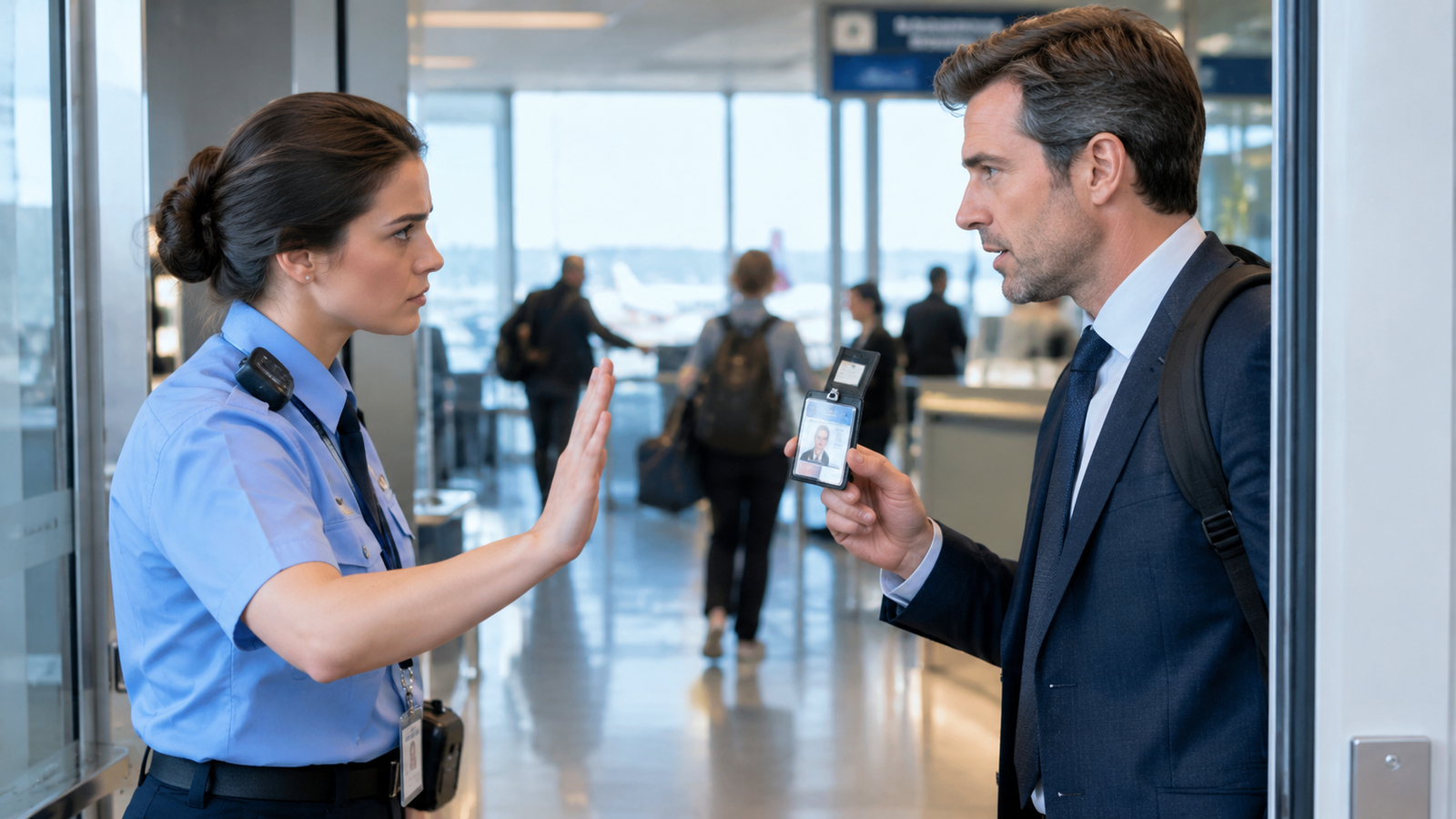
One such incident began when a female airport staff member stopped a man who was attempting to enter an office area.
At first, she had no idea who he was.
She simply saw someone approaching a restricted office entrance and decided to do what she believed was her responsibility: stop him and ask for authorization.
The man, however, turned out to be a visiting officer.
What happened next showed why airport security procedures, identification checks, and respectful communication are all important.
A Normal Day at the Airport
The airport was busy, as usual.
Passengers were moving through terminals, airport employees were heading toward their respective work areas, and staff members were performing their daily responsibilities.
Near one of the office sections, a female staff member was monitoring access to an area that was not open to everyone.
Restricted office areas inside airports are different from ordinary public spaces. People generally cannot simply walk into them without proper authorization.
The staff member noticed a man approaching the entrance.
He looked confident and appeared to know where he was going.
As he reached the door, he attempted to enter.
The woman immediately stepped forward.
“Sir, you cannot enter the office,” she said.
The man stopped.
He appeared surprised by the statement but did not immediately respond angrily.
The staff member continued to explain that access to the office was restricted and that he needed to provide proper authorization before entering.
The Situation Becomes Noticeable
For a few seconds, the situation became uncomfortable.
The man appeared to believe that he had every right to enter, while the staff member was equally confident that she was simply following airport procedures.
A few people nearby began to notice the interaction.
In situations like this, misunderstandings can easily become arguments.
A person who believes they have authorization may become frustrated when stopped. Meanwhile, a security or airport employee may feel that they have to enforce the rules regardless of who is standing in front of them.
But this man chose a different approach.
Instead of arguing, he calmly reached for his identification.
The Official ID Changes Everything
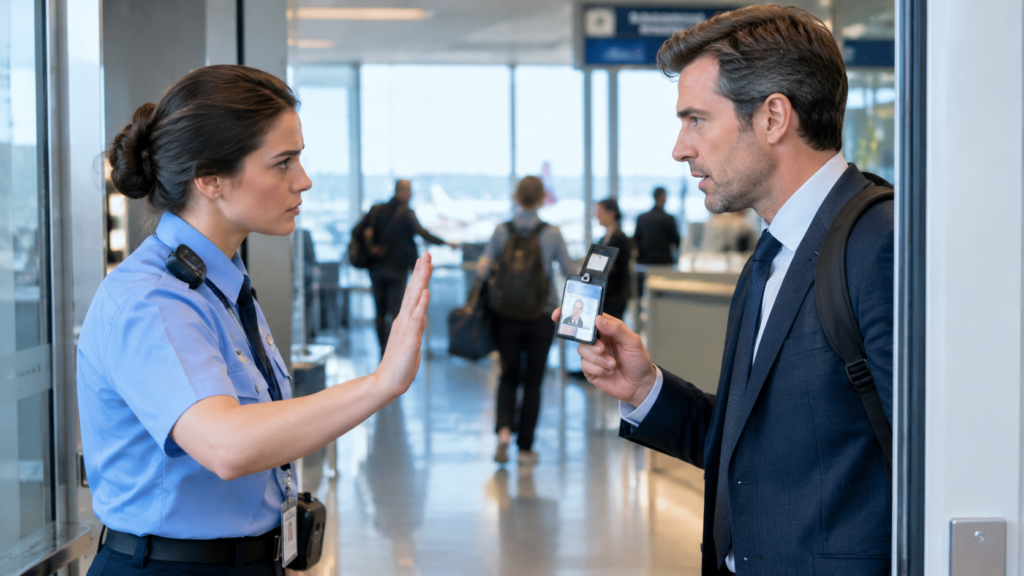
The man took out his official identification card and showed it to the airport staff member.
She carefully examined the card.
Within moments, the situation became clear.
The man was a visiting officer.
He had legitimate authorization to be in the office area.
The staff member had simply not known his identity or official status when she initially stopped him.
Her reaction changed immediately.
What had appeared to be a confrontation was actually nothing more than a security check and a misunderstanding.
The officer could have reacted angrily.
He could have demanded to know why someone had stopped him.
He could have embarrassed the staff member in front of other people.
Instead, he remained calm.
That small decision made a significant difference.
She Was Doing Her Job
The officer understood that the woman was not trying to insult or inconvenience him.
She was doing her job.
Airport employees responsible for access control have to be careful. They cannot assume that every person who looks confident or appears to know where they are going has permission to enter a restricted area.
An airport is a high-security environment.
Even an official-looking person may need to present identification before being allowed through a controlled entrance.
The staff member therefore had a legitimate reason to ask questions.
Her responsibility was not to guess who the man was.
Her responsibility was to verify it.
A Lesson in Professionalism
The incident offered an important lesson about professionalism.
It is easy to become angry when someone questions us.
Nobody enjoys being stopped, especially when they believe they are doing something completely legitimate.
But professional environments often require people to follow procedures even when those procedures create temporary inconvenience.
The officer understood this.
Instead of taking the situation personally, he provided identification and allowed the employee to verify his authorization.
Once the misunderstanding was resolved, the interaction could continue normally.
The staff member also recognized that she had made an incorrect assumption about his status and apologized.
The officer accepted the apology.
There was no need for shouting.
There was no need for an argument.
There was no need to turn a small misunderstanding into a major incident.
Why Identification Checks Matter
This story also highlights the importance of official identification in secure environments.
An airport contains many areas that are not accessible to passengers or ordinary visitors.
These areas may include administrative offices, operational facilities, security zones, staff-only spaces, and other controlled locations.
Access procedures help protect employees, passengers, airport infrastructure, and sensitive operations.
That is why staff members may ask individuals to present identification or authorization before entering certain areas.
A person may genuinely have permission to enter, but the employee at the door may not know that immediately.
The correct procedure is verification.
That is exactly what happened in this situation.
The Officer’s Reaction Was Important
One of the most interesting parts of the incident was not that the officer had official authorization.
It was the way he handled being challenged.
People in positions of authority are sometimes expected to receive immediate recognition.
But an identification card is often more useful than a title.
Rather than saying, “Do you know who I am?” the officer simply showed his official ID.
That was enough.
His identification answered the question without creating unnecessary conflict.
His calm response also helped the staff member maintain her professionalism.
Respect Works Both Ways
The incident demonstrates that respect should work in both directions.
Security and airport staff deserve respect for carrying out their responsibilities.
At the same time, officials, visitors, and employees who are stopped should be treated respectfully while their authorization is being verified.
A security check does not necessarily mean that someone is being accused of doing something wrong.
Sometimes it is simply a routine precaution.
Likewise, a person who has been stopped should not automatically assume that the employee is disrespecting them.
The employee may simply be following instructions.
When both sides understand this, many potentially difficult situations can be resolved in seconds.
What Could Have Gone Wrong?
Imagine if the officer had become angry immediately.
The situation could have escalated.
He might have raised his voice.
The staff member might have become defensive.
Other employees might have become involved.
A simple access-control question could have turned into a serious workplace dispute.
Instead, the officer showed his identification.
The staff member checked it.
The misunderstanding ended.
That is a powerful example of how a calm response can prevent unnecessary conflict.
The Importance of Staying Calm
Calm communication is especially important in busy public environments.
Airports are already stressful places.
Passengers may be worried about missing flights, employees may be working under time pressure, and security personnel must remain alert.
Adding anger or confrontation to an already busy environment can make matters worse.
The officer’s calm behavior demonstrated that patience can be more effective than authority.
He did not need to prove that he was important.
His official identification did that for him.
A Small Moment With a Bigger Message
The incident may have lasted only a few minutes, but it carried a much bigger message.
Rules are important.
Identification is important.
Security procedures are important.
But so are patience and respect.
The female staff member was right to question an unknown person attempting to enter a restricted area.
The officer was right to provide his identification.
And once the misunderstanding was resolved, both sides were able to move forward professionally.
That is how a potentially awkward situation should ideally be handled.
What Airport Workers Can Learn
Airport staff members can take several lessons from incidents like this.
First, never judge someone’s authorization based solely on appearance or confidence.
Second, follow established access procedures consistently.
Third, communicate clearly when stopping someone.
Instead of making the interaction personal, explain the reason for the check.
For example, telling someone that an area is restricted and that identification is required is much better than making assumptions about their intentions.
Finally, once proper authorization is established, allow the situation to return to normal.
There is no benefit in embarrassing someone simply because a misunderstanding occurred.
What Officials and Visitors Can Learn
The lesson also applies to officials and visitors.
Having authority or permission to enter a restricted area does not mean every employee will immediately recognize you.
You may still be asked to show identification.
The most professional response is usually simple: provide the required identification and allow the staff member to complete the verification.
A few seconds of patience can prevent a much bigger problem.
The Bigger Picture
Modern airports depend on thousands of people performing different jobs correctly.
Security personnel monitor access.
Airport staff assist passengers.
Officials manage operations.
Employees work behind the scenes to keep flights and facilities running.
Every person has a role.
Sometimes those roles intersect in unexpected ways.
A staff member may stop an officer.
An officer may need to prove authorization.
A passenger may need to answer additional questions.
None of these things necessarily indicate wrongdoing.
They are part of maintaining a secure environment.
The Takeaway
The story of the airport officer who was stopped at an office door is ultimately not about who was right or wrong.
It is about how a misunderstanding was handled.
The woman did her duty by questioning someone attempting to enter a restricted area.
The officer did the right thing by presenting his official identification instead of arguing.
Once the facts were clear, the misunderstanding was resolved peacefully.
That is the kind of professionalism that makes workplaces safer and more respectful.
In the end, an official ID card may have changed the entire situation in a matter of seconds.
But the real lesson was even simpler:
Follow the rules, verify before assuming, and treat people with respect—even when you are certain you are right.
A security check should not automatically become a confrontation.
Sometimes, all it takes is a question, an identification card, and a little patience to resolve the situation.
And in a busy airport, that can make all the difference.